



A celebration of the life of Dr. Stanley R. Howe will be held this Saturday, June 6, at the Lower Meeting House (East Bethel Church) located at 1797 Intervale Road, Bethel, Maine. Beginning at 2:00 pm, there will be special remarks by family and friends, followed by music, and memories/comments from those attending.
Dear friends,
By now, most of our readers have heard the sad news already, but for those who have not yet received word, it is with heavy hearts that we share news of the passing of Dr. Stanley Russell Howe, Executive Director of the Museums of the Bethel Historical Society from 1974-2010 and Director of Education and Research from 2010-2012.
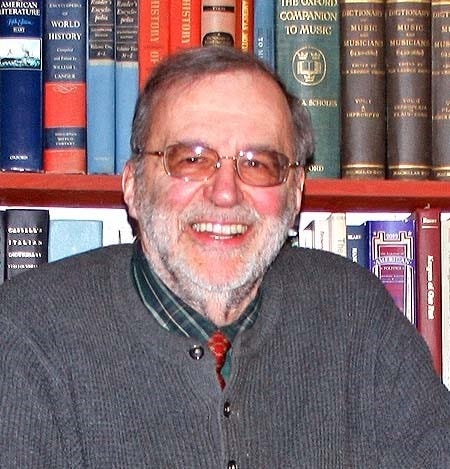
Every member of the Society probably has a Stan Howe story. My own begins in the summer of 2014. I had recently graduated from the University of Maine at Augusta with a degree in information and library studies. Throughout my studies, I had worked as a reference assistant at the Auburn Public Library and I had recently accepted a second part time job as a project archivist in the Shaker Library at Sabbathday Lake Shaker Village. Working at Shaker Village had proved an absolutely wonderful experience, but it was one that was destined to eventually end when I finished scanning and cataloging the community’s extensive photographic collection, and so I had my eyes peeled for future opportunities.
A former teacher spotted me at Molly Ockett Day, pulled me aside to ask me what I had been doing, and then promptly marched me over to talk with Randy Bennett, Stan’s good friend and successor as executive director of the Bethel Historical Society. It turned out that the Society was just months away from breaking ground on a new facility. The Huntoon Center, an addition to the Robinson House, would eventually house the Society’s extensive library, archives, and museum collections, and would also include an office for library personnel and reading room for public access. The facility was a gift from supporter Charles R. Huntoon and it was expected that there would be enough funds to provide for a new part-time staff person to manage the transition.
In the meantime, I began regularly attending BHS programs and got to know both Randy and Stan. Stan was particularly enthused because he found out that I had an interest in political history. While Stan and Randy shared many interests, Randy is given to quote Artemus Ward creator Charles Farrar Browne (“I’m not a politician and my other habits are good”). Stan, on the other hand, never shied from controversy, and, indeed, seemed to revel in whatever the political scandal of the day was.
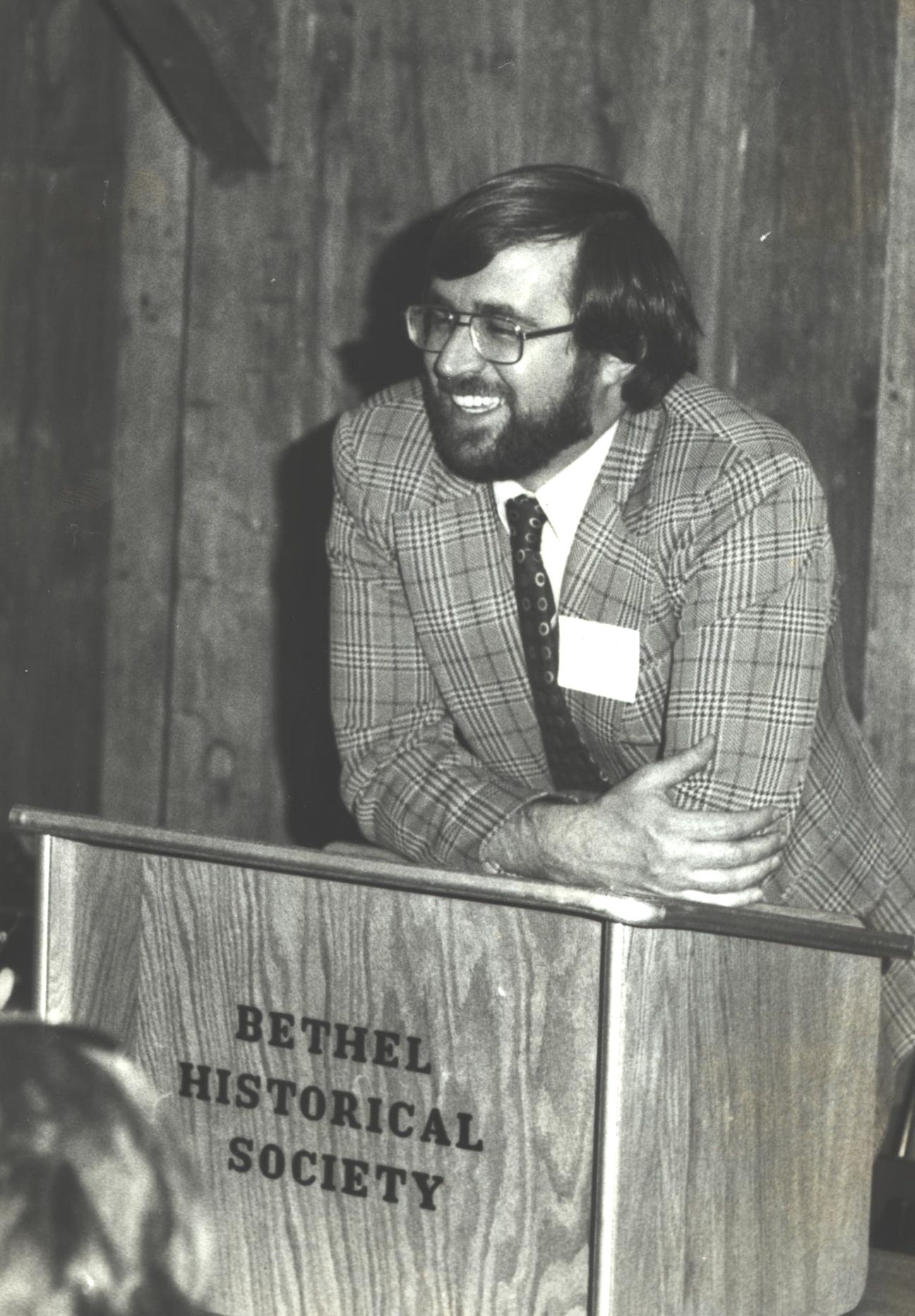
But while he followed the news closely, his true passion was always for the history of the nineteenth-century Republican Party and, in particular, Abraham Lincoln. In the fall of 2014, the historical society showed a documentary about Lincoln and Stan brought over a selection of his books about the sixteenth President, which easily covered an entire table.
A week later, Stan invited me over to pick up some duplicate books that he had found in his collection and thought I might be interested in. I drove up to Stan’s house on a Sunday around noon, expecting that I would pick up the books, chat for a bit, and be back in a couple hours. Instead, I didn’t arrive back home until evening. In the meantime, Stan had given me an entire box of books, showing me them one at a time and explaining the merits of each one, toured me through every room in his house, told me the entire story of his life and career, and taken Randy and me out to eat at Kowloon Village.
By now, many readers, I’m sure, are nodding, having lived through the full Stan Howe Experience themselves. For the uninitiated, the basic facts of Stan’s life are these:
Stan was born on August 25, 1943 to Rodney Kimball Howe and Geraldine Alma Stanley Howe. At the time of his birth, millions of American soldiers were serving overseas in the fight against fascism.
(Stan’s first cousin, twice removed, Clarence Decatur Howe, known as C. D. Howe, was then serving as Minister of Munitions and Supply in the Canadian government. C. D. Howe was a controversial figure, but Stan was always proud of the fact that, for his work on wartime munitions, Winston Churchill had given Howe much of the credit for winning World War II. Stan heard much about Howe growing up, and his admiration for him sparked an interest in Canadian history, and eventually inspired him to write his dissertation on Howe’s political career.)
Stan and his four younger siblings, Greg, Sue, Allan, and Cathy, grew up on the Stanley family farm in East Bethel. Their family roots in this area extend back to the 1770s.
Stan began his education in a one-room school in East Bethel and later attended Bethel Primary (later known as the Ethel Bisbee School) and Crescent Park School. He graduated from Gould Academy in 1962 and from Gorham State College (now University of Southern Maine) in 1966. At first Stan wasn’t sure what he was going to do after receiving his undergraduate degree, but a classmate alerted him to the fact that the University of Connecticut was effectively free to attend for graduate students in the Department of History—even those from out of state. Stan was awarded his master’s degree in American history from “UConn” in 1967. He went on to earn a doctorate in Canadian history from the University of Maine in 1977.
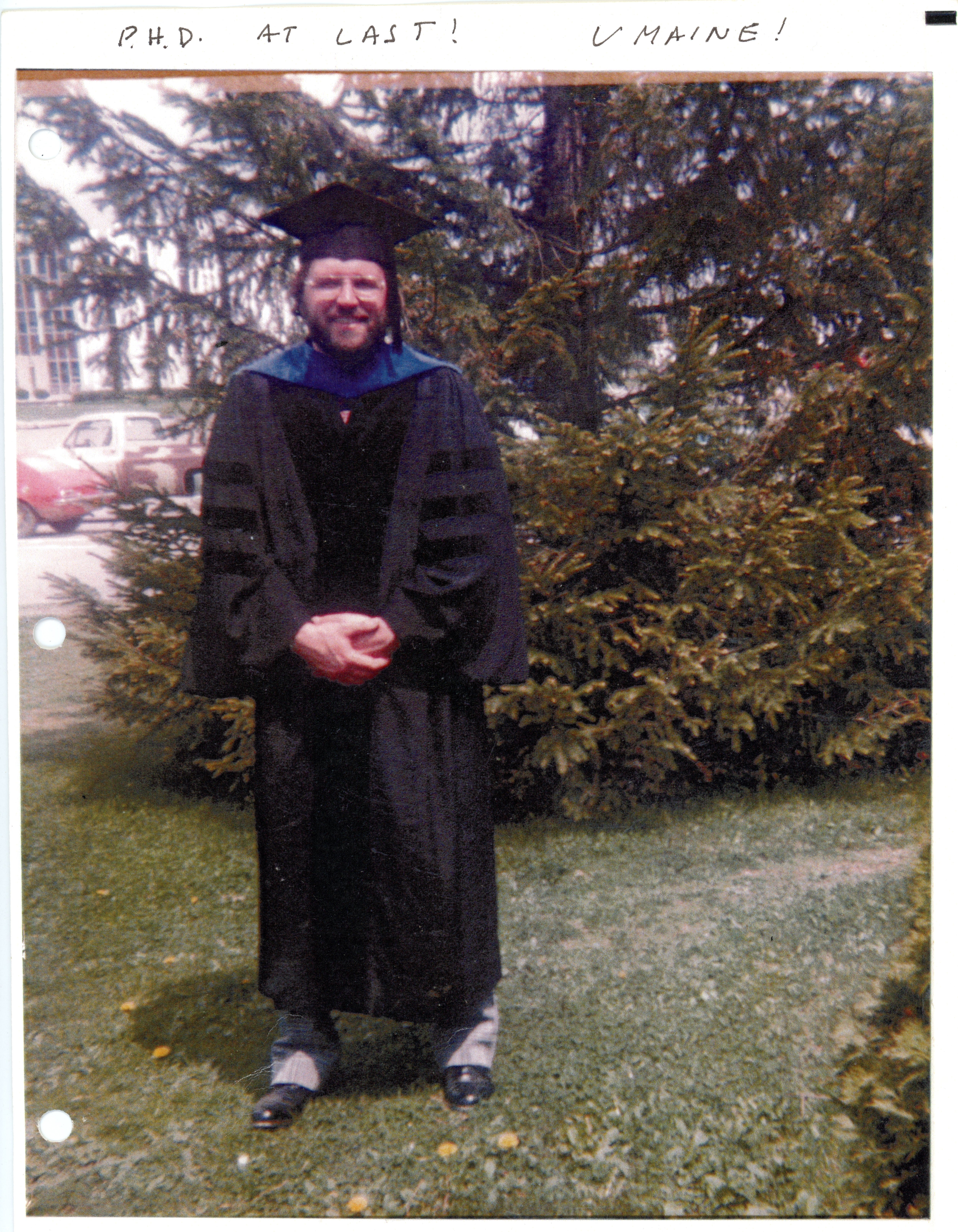
Stan received numerous awards and honors in the field of history, including induction into the history honor society Phi Alpha Theta in 1974 and selection for the Seminar in Historical Administration at Colonial Williamsburg in 1980. He served on the board of organizations including the Maine Archives & Museums, the Maine Historical Society, the Maine Historic Preservation Commission, and Maine Preservation, was book review editor for the journal Maine History, and taught history classes at the University of Maine, Westbrook College, and the University of New Hampshire’s College for Lifelong Learning.
In addition to his important role in preserving local and regional history, Stan was also a civic leader, serving on the Bethel Select Board from 1975-1983 and again from 2004-2015, including many terms as Chair. He served on boards and committees including the Bethel Planning Board, Bethel Bicentennial Committee, SAD44 Board of Directors, Gould Academy Board of Trustees, Project Opportunity, Bethel Library Association, Oxford County Republican Committee, Republican State Committee, Woodland Cemetery Company, East Bethel Cemetery Association, Alder River Grange, Oxford Pomona Grange, Maine State Grange, Middle Intervale Meeting House Society, and Oxford County League of Historical Societies.
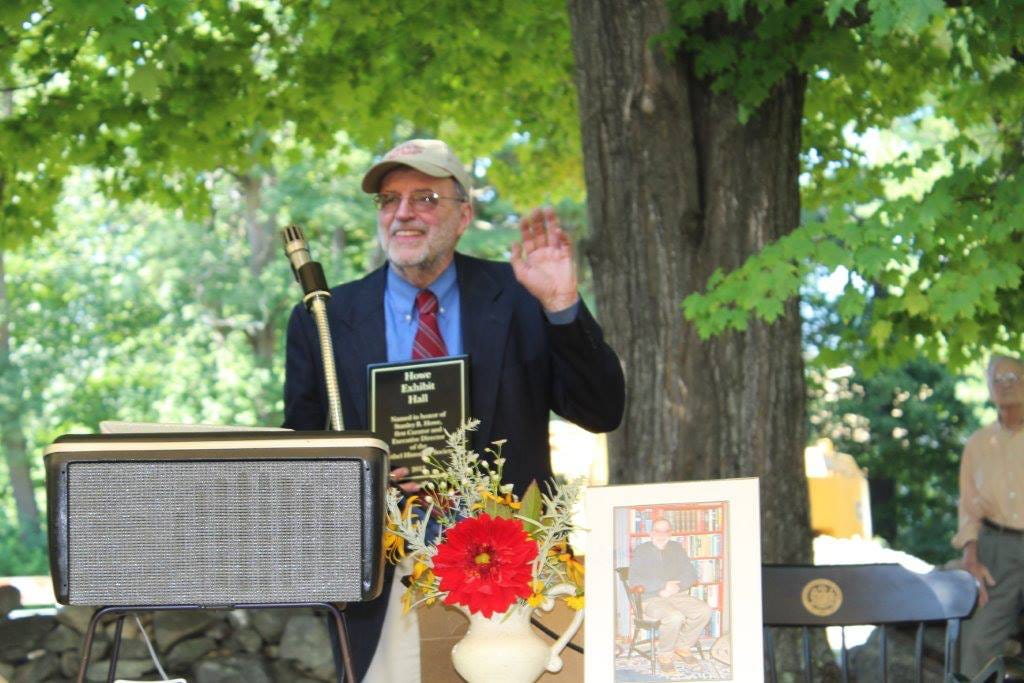
For his many contributions, Stan was honored as the Alumnus of the Year at Gould Academy in 1982, received a special Chamber of Commerce Community Service Award, also in 1982, and was selected by the Bethel Rotary Club as a Paul Harris Fellow in 2003. In 2005, he was presented the Henry H. Hastings Award for Citizenship by the Bethel Area Chamber of Commerce “for decades of service to the citizens of Bethel, Oxford County and Maine.”
But it wasn’t any of Stan’s achievements that made the biggest impression on me that first long afternoon I spent with him. It was the immense gratitude, even amazement, with which Stan spoke about his life. Stan told me about how fortunate he had been in his education and career. He couldn’t believe that “a boy from East Bethel” had the opportunity to have the experiences and meet the people that he had. He had become friends with the most incredible and most wonderful people.
Stan would become especially nostalgic whenever mentioning his PhD adviser Alice Stewart, a powerhouse in the University of Maine’s history department, who had helped to found the Canadian-American Studies program. But this sentimentality would turn to excitement when recounting the story of how Alice and her circle of advisees had found themselves stuck when the door to one of the university library’s private study rooms jammed. “Move aside, boys!” Alice had commanded after several of the young men had tried unsuccessfully to force the door open. And with one large heave of her body, the door sprang open, releasing them.
The Making of a Public Historian
Many of Stan’s graduate school buddies had pursued more traditional career paths in the academic history field. But Stan was pulled in a different direction. Stan’s grandmother, Edith Kimball Howe, had nurtured his early interest in history, was good friends with Eva Bean, who had published the book East Bethel Road in 1959, and was the primary mover in the founding of the Bethel Historical Society in 1966. Stan had been a member of the society since the early days—several times he showed me his original membership card, personally signed by Eva.
Eva passed away in 1969, just three years after the Bethel Historical Society’s founding, so she never got to see the society fully flourish or even acquire a permanent headquarters. (In those early days, meetings were mainly held at the Bethel Library). A few years later, the Society’s fortunes changed dramatically when Sidney W. Davidson, a New York attorney who served as chairman William Bingham Trust for Charity, had the idea to restore the 1813 Broad Street home of Dr. Moses Mason and his wife Agnes Straw Mason, and to donate it the Bethel Historical Society for its headquarters.
The plans for the restoration of the house called for the creation of a modest apartment on the second floor where the curator would reside, and the Trust would provide the initial endowment funds to support this new position. For Stan, the timing could hardly have been better, and the trustees of the historical society were equally fortunate to have a well-qualified prospect with the local credibility to match. And so, when the Society opened the Mason House to the public in 1974, Stan was hired as the Society’s first employee.
Then as now, few local historical societies could afford to support any paid staff whatsoever. Stan was getting in at the ground floor of a growing organization, with the opportunity to help shape its future and to take on the role he seems to have been destined for: as the quintessential public historian.
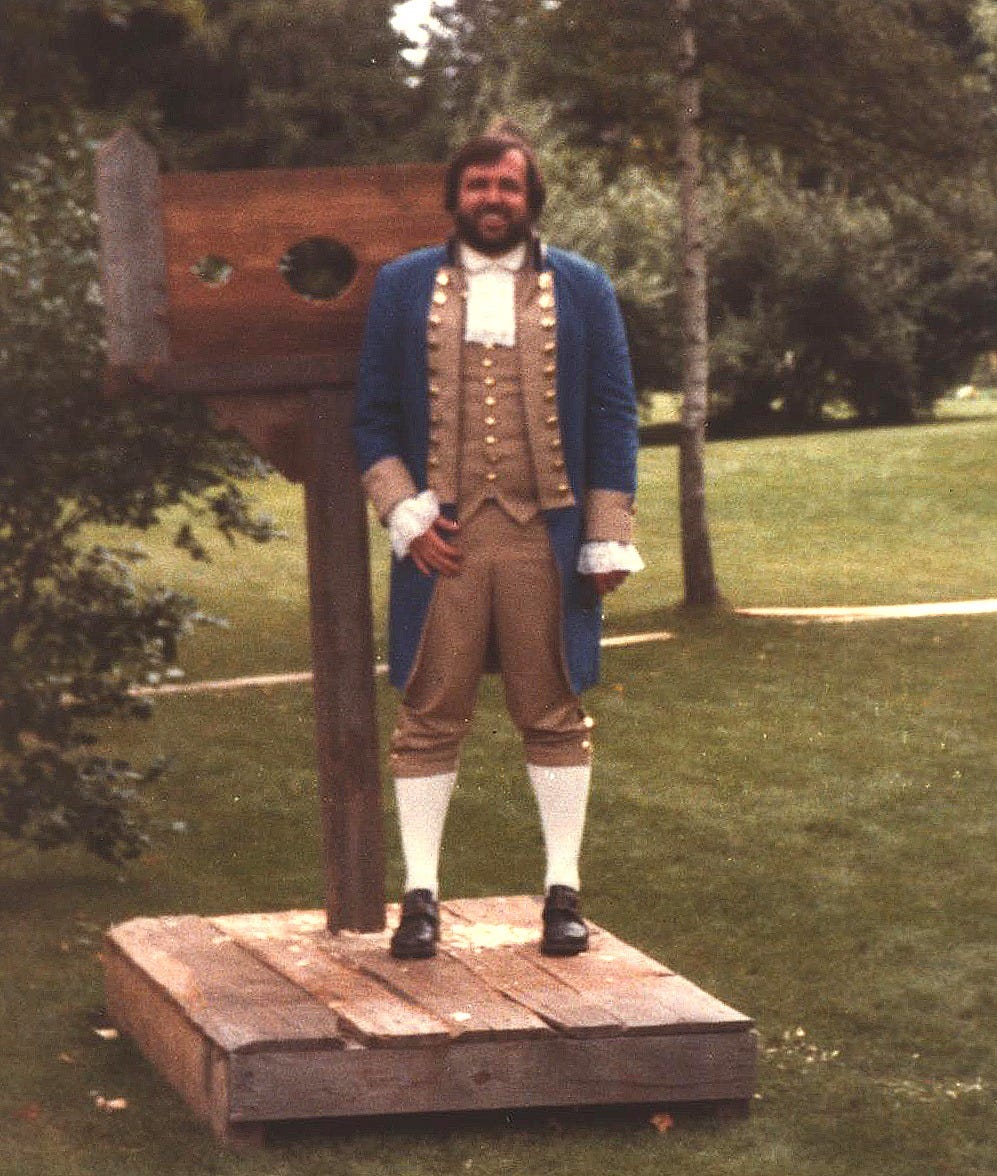
He retained friendships with former professors and classmates who had entered academia, and he occasionally taught college courses himself. In his role as book review editor for the journal Maine History and as a committee member for several statewide organizations, Stan remained connected to the larger world of state and local history, and these connections would redound greatly to the benefit of the Bethel Historical Society.
At the same time, Stan never lost sight of what an organization rooted in community history should be. The minutiae of local history still interested him greatly, and he was as happy debating which house was the oldest in a particular neighborhood as he was discussing the historical theories and methodology of Richard Hofstadter (one of his favorite historians).
For many of our longtime members and supporters, Stan became nearly synonymous with the Bethel Historical Society. Along with Randy Bennett—the Society’s longtime curator and Stan’s eventual successor as director—a succession of dedicated trustees, and an active base of volunteers and supporters, Stan led a transformation of the Society. The organization’s mission, which was originally focused mainly on the history of the town of Bethel, expanded, and the Society began collecting a wider range of materials and sponsoring more regionally-focused programs, exhibits, and publications.
The Society became a leader in publishing books on regional history, such as Randy Bennett’s encyclopedic Oxford County, Maine: A Guide to Its Historic Architecture. In addition to popular community events such as Sudbury Canada Days, Heritage Days, and New Years’ Bethel, the Society organized ambitious gatherings—such as a 1985 conference on rural reform and a conference on the history of the Grange in Maine in 2008—and hosted a number of noted speakers such as Pulitzer-prize winning historian Alan Taylor.
Today, the Museums of the Bethel Historical Society is a regional history museum, with an extensive research center, that collects, preserves and interprets the history of western Maine and the White Mountain region of Maine and New Hampshire.
By the time I joined the staff of the Museums of the Bethel Historical Society in the spring of 2015, Stan had been retired from the regular staff for a few years, but was still a constant presence. Every morning, Stan would bring the local newspaper up to Randy’s office on the third floor, sit down in a chair and read it through. He would pick up and post the Society’s mail, clean up any sticks that fallen in the the yard, and give tours to anyone who stopped by (sometimes flagging down and pulling people in off the street). Stan made everyone feel welcome here and was always extremely generous with his time and eager to share his knowledge and stories.
Most recently, Stan oversaw the transfer of his Broad Street home, the Hastings Homestead, to a new nonprofit, the Hastings Homestead Museum, which plans to develop the property into a historic house museum chronicling five generations of ownership by the Hastings-Howe family.
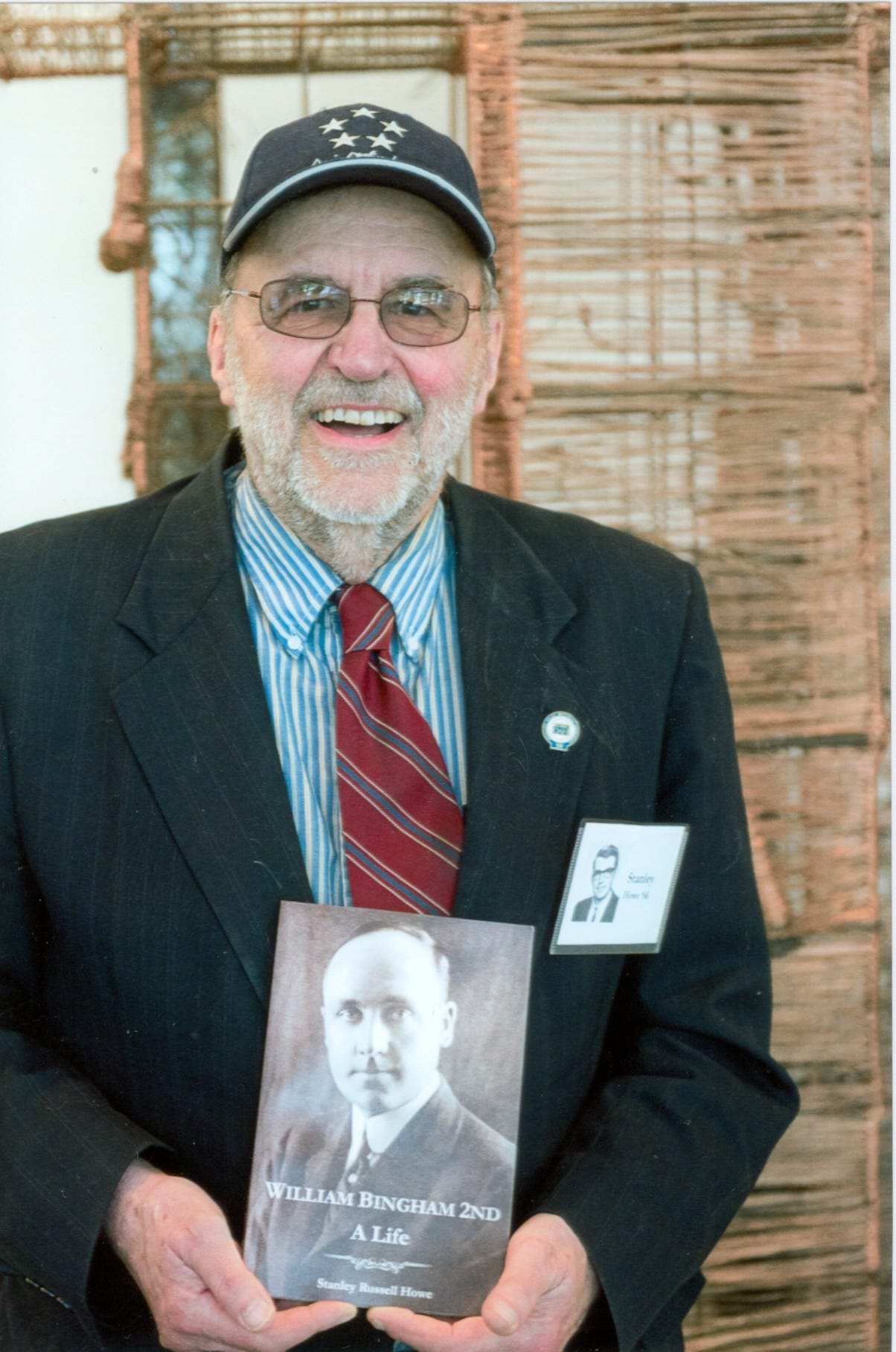
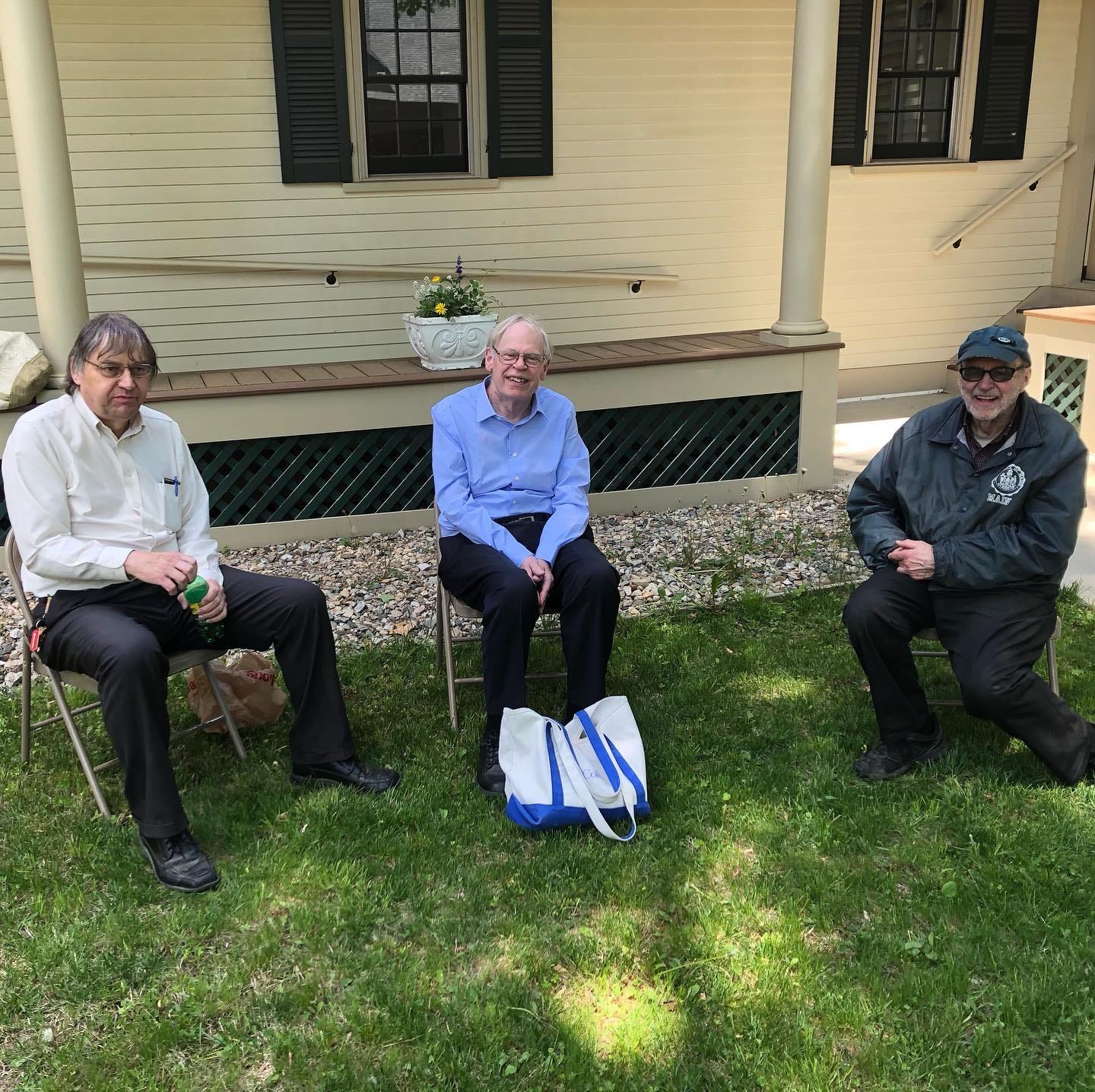
Stan was thrilled to welcome me aboard the Bethel Historical Society, and took an enthusiastic interest in my professional development and in introducing me to people he wanted me to know and wanted to know me. When old friends such as Tommy and Charles, or Rich and Vic would come to visit, he would invite me over to his house to take part in the lively discussions that would be had over coffee and tea and muffins baked on his wood stove. Beginning in 2015, I would accompany him annually to the “Maine Town Meeting” event at the Margaret Chase Smith Library in Skowhegan, of which Stan had one of the longest unbroken streaks for attendance. I had the pleasure of working with Stan on several projects, including doing the formatting and design for his final book, William Bingham 2nd: A Life, a biography of Bethel’s greatest benefactor, published by the Bethel Historical Society in 2017.
Like Stan, I have always considered myself immensely fortunate for the circumstances and timing that brought me to the Society. Almost immediately, I felt a keen sense of awareness that I was becoming a part of something that was much larger. Stan and Randy both had a profound vision for what the organization could eventually become and their enthusiasm was infectious. The state-of-the-art new collections storage facility and research library that was being built—and which I would have the pleasure of working in—was just the latest development in the fulfilment of our longstanding goals.
When I took over as Executive Director of the organization, I understood my mission, in part, as carrying forward what my predecessors had already worked so hard to set in motion. And for as long as I continue to work here, one of my motivations will always be to do Stan proud.
Stan passed peacefully in the early hours of the morning on Sunday, February 22.
He was a giant of Maine history and will be greatly missed.
Beautifully written, Will. I can hear Stan's voice when I look at his pictures.
Good job! I think Stan would be very happy with that tribute, Will. Also, I’m sure he was very happy you came along when you did, and knowing MBHS was going to have someone with your commitment and passion leading it into the future!