



Note: The following history of the Naimey Block on Main Street was originally written for the 2022 Bethel Town Report.
One Hundredth Birthday of the Naimey Block
In 2022, one of Main Street’s landmarks, the “Naimey Block,” turned 100 years old. The year also marked the 80th year that the building has been home to the Bethel office of the United States Postal Service. The name of the building, which is inscribed in the brickwork, comes from its original owner, Michael Abraham Naimey, who had it constructed in 1922.
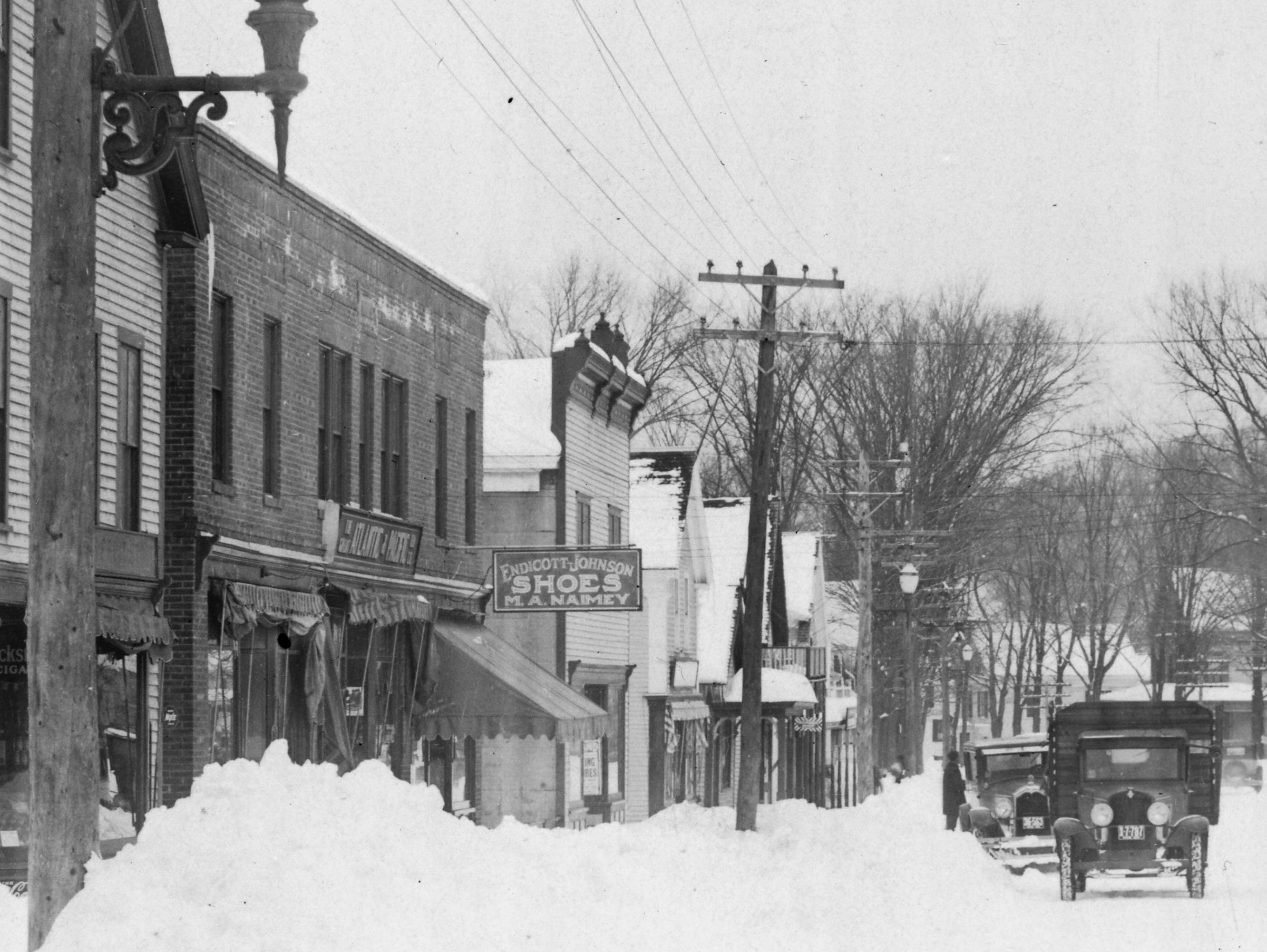
Naimey’s name appears on most official documents as Michael, but is also sometimes given as Mitchell, and was probably originally Michail. To friends in Bethel, however, he was always Mike. He was born to Abraham and Susie Naimey in Beirut on May 3, 1892. The Middle Eastern city is the current capital of Lebanon, but at the time the region was part of Syria and under the rule of the Ottoman Empire. The Naimeys were part of the first major wave of Syrian and Lebanese immigration to the United States, which spanned from the 1880s to the 1910s. Approximately 90,000 Syrians arrived in the US during this time. Like many immigrants, they were motivated by economic opportunities and the chance to pursue the American Dream, but also sought religious freedom. Christian Syrians, like the Naimeys, had been the targets of numerous conflicts and massacres in the region during the preceding decades.
The Naimeys apparently first went to Greece, where they lived for a time. Mike travelled from Patras, Greece, to New York on the S. S. Laura in 1910, and then went to Portland, Maine, following his older brother, William, who had immigrated six years earlier. Mike filed his intention to become a United States Citizen in 1913. At the time, he still lived in Portland and was working as a carpenter. Just a few years later, however, he and his brother purchased property in Oxford, Maine, where they opened a dry goods store under the name of “Naimey Brothers.”
In June of 1918, Naimey was drafted into the service of the United States. Although it does not appear he was ever deployed overseas, he served for the remainder of World War I as a company mechanic at Camp Devens. He was honorably discharged in late November following the Armistice, and returned to Oxford where he and his brother continued their business. On October 14, 1919, Naimey took the Oath of Allegiance at the Paris Courthouse and officially became a citizen of the United States.
He came to Bethel in 1921 and the following March purchased from Stanley Wentzell what an Oxford County Citizen article called “an unsightly old house and store” on Main Street and tore them down. He “rendered a real service” to the town by constructing in its place the “attractive brick building” seen today.
The Naimey Block originally had three separate store fronts on the first floor and two apartments on the second. The Great Atlantic and Pacific Tea Co. (“A&P”) was the first to open in December, 1922, followed by the U T K Tailor Shop, which began advertising in March of 1923. Naimey held the grand opening for his own M. A. Naimey dry goods store on April 14, an event which included a live orchestra. Early tenants in the apartments included Mr. and Mrs. Charles Perry and the Frank Hunt family.
In the late 1920s, Miss Marie Baker came to work at Naimey’s store. She was born in Gorham, New Hampshire, on November 16, 1903, but her parents later moved to Newry. Marie and Mike soon fell in love, and were married at St. Paul’s Rectory in Portland, Maine, on June 13, 1929. Their son John was born the following May 10, and another son, William, on May 26, 1931.
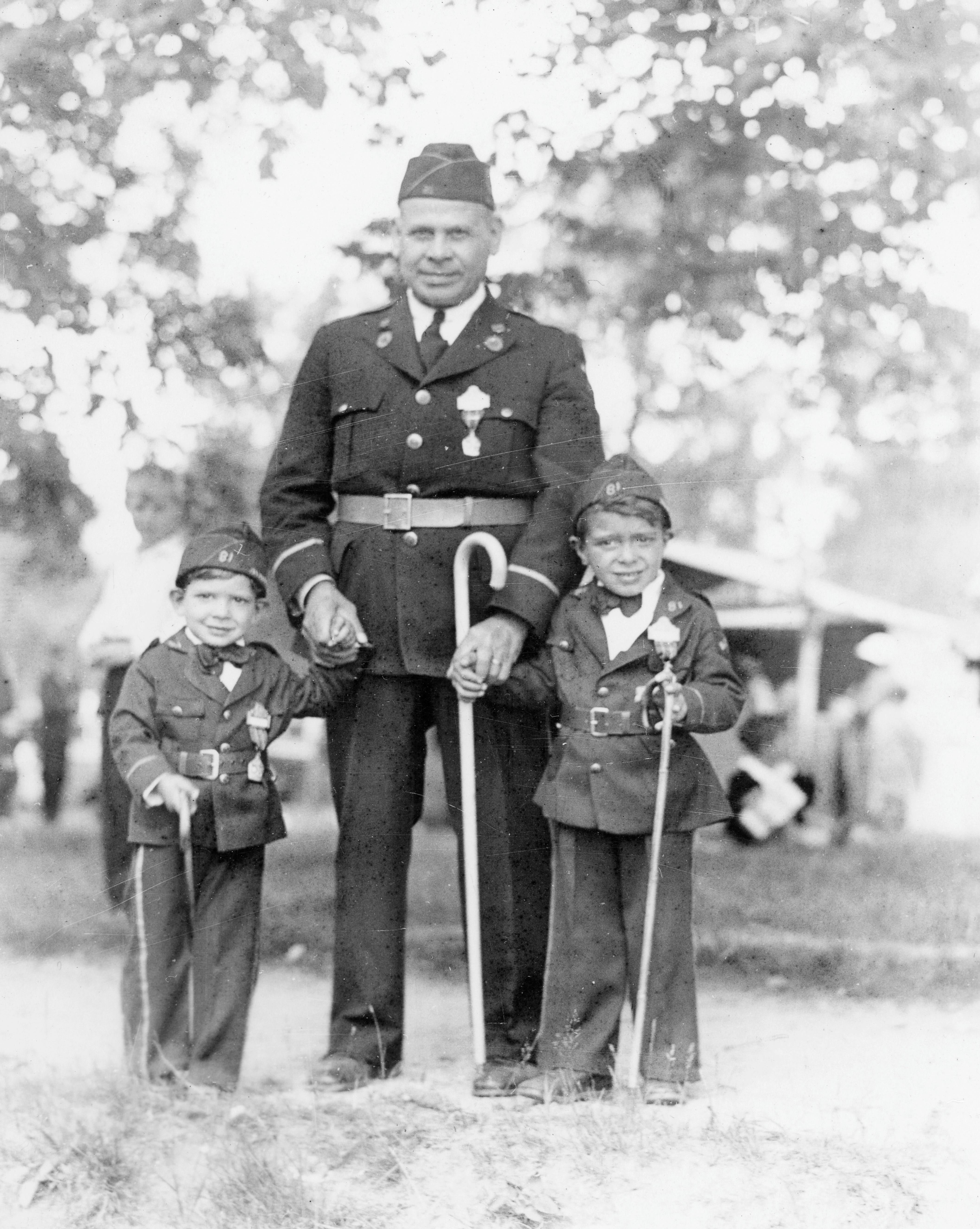
Mike and Marie were valued members of the Bethel community. Proud of his service to his chosen country during the first World War, Mike was a longtime member of the American Legion, and Marie was particularly active in the Legion Auxiliary.
In 1930, Naimey purchased the “Horatio Upton place” on the Northwest Bethel Road, and made a number of improvements, including building himself a workshop on the property. Unfortunately, the main home, the historic Eliphaz Chapman homestead, burned on September 28, 1937.
This was a setback for the family, but fortunately business was still going well. The next year, Mike thoroughly renovated the store, drawing on his experience as a carpenter to do much of the work himself. As the A&P had moved out to a new location, he took out one of the interior dividing walls, doubling the size of his own store.
At the end of 1940, Mike began advertising a “going out of business sale,” and in January of 1941 he experienced some health issues and was admitted to Togus for several months. The final closeout sale was in May. The Labnon Dry Goods Co. bought out the store and in the fall the Naimeys moved to Wells, Maine. They continued to reside in Wells for many years but later apparently began wintering in Florida, where Mike died at the Pratt General Hospital in Coral Gables on February 2, 1953.
Harold Chamberlin purchased the Naimey Block in October 1941, and the next year, the Bethel Post Office moved into it. The Post Office had previously been in the Wiley or Swift Block near the top of Main Street for over thirty years, but just one year prior had moved across the street to a former hardware store where Northeast Bank now stands.
Later owners of the Naimey Block have included Norman and June Greig, John Grover, Esther Crockett, Brian Strickland, and current owner Carl Glidden. It has been home to a number of businesses, from John Trinward’s dentist office to the Bethel Spa restaurant. The Post Office has remained at this location for over eighty years, and now occupies the entire first floor.
Although the name of Mike Naimey is seldom remembered in Bethel today, the Naimey Block stands today as the village’s most enduring monument to the many cultural and economic contributions that have been made by hardworking and patriotic first-generation immigrants.
William F. Chapman, Executive Director
Museums of the Bethel Historical Society